History of AI Innovation at Argonne
Tracing Argonne’s computing breakthroughs from AVIDAC to Aurora.

As a birthplace of foundational computing technologies, Argonne is both a technology originator and a science enabler — developing breakthrough tools and systems and applying them to drive discovery. Our work spans digital computing, automated reasoning, parallel computing, grid software, machine learning, and today’s foundation models for science.
Scientific and Technical Progress Milestones
1950s–1970s: Laying the computational foundation
Argonne was one of the first U.S. national labs to adopt digital computing for scientific research.

Technical and scientific breakthroughs:
- Built the one-of-a-kind AVIDAC digital computer and deployed other systems to solve nuclear physics and reactor engineering problems.
- Became the world’s leading center for automated theorem proving (ATP), introducing the algorithms and proof strategies that made symbolic AI possible.
- Advanced automated theorem proving by integrating unification and resolution methods with J. Alan Robinson, making Argonne the first place where these ideas were applied in working systems.
- Cultivated a global ATP research community by hosting workshops, helping establish the Journal of Automated Reasoning, and training future leaders in computing and AI.
Impact: Established Argonne as both a pioneer in scientific computing and the intellectual home of automated reasoning, establishing the foundation of modern symbolic AI.
1980s–1990s: Pioneering parallel and distributed computing
As scientific problems grew in scale, Argonne played a central role in developing scalable parallel computing software and high-performance tools — the foundation for modern machine learning.
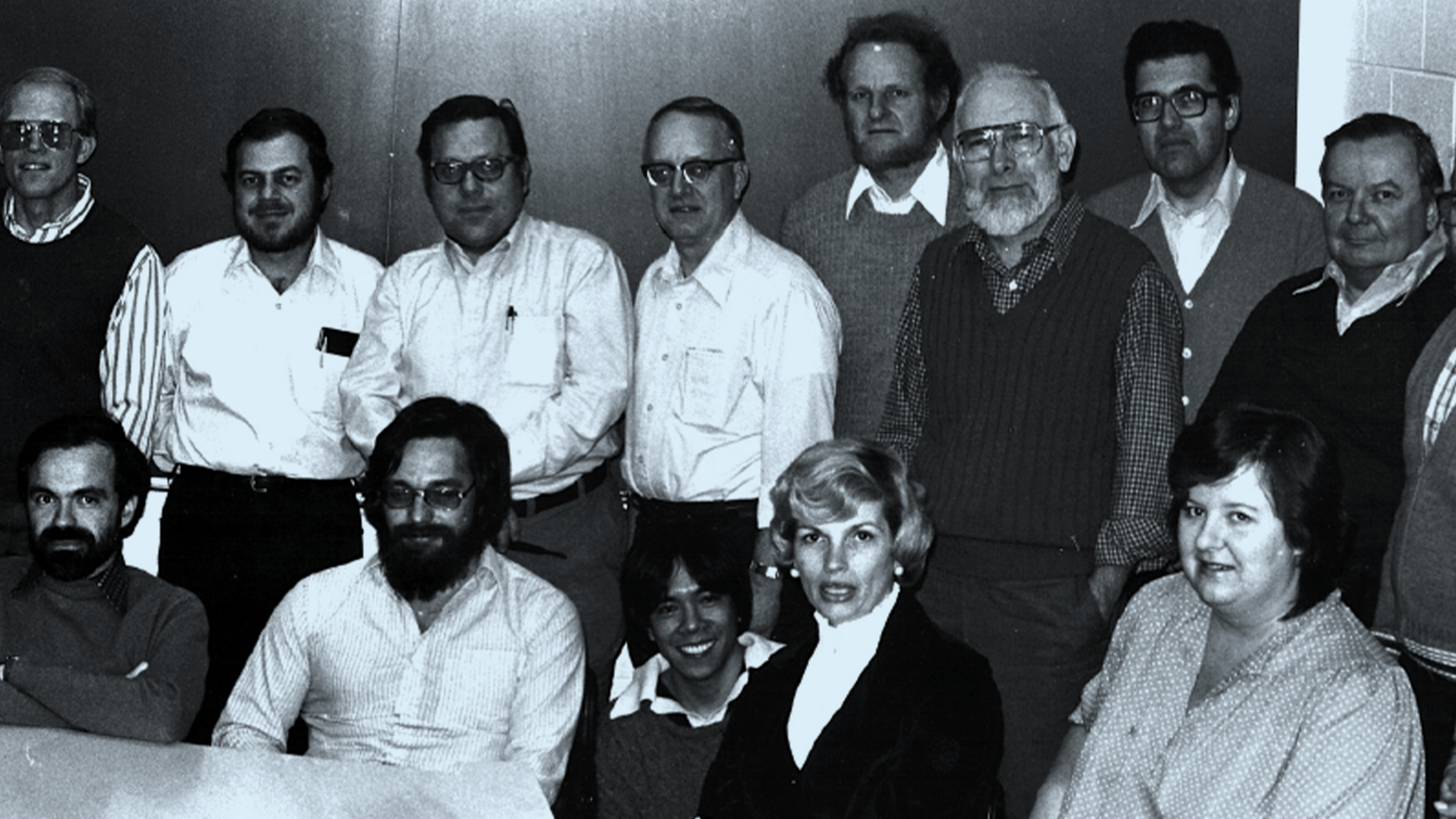
Technical and scientific breakthroughs:
- Created OTTER, the world’s leading automated reasoning system of its era, advancing machine-oriented logic and solving long-standing open problems (including contributing to the proof of the Robbins Conjecture).
- Developed automatic differentiation tools, a foundational component of modern AI frameworks used for training neural networks.
- Pioneered parallel logic programming through GigaLIPS, scaling automated reasoning to billions of inferences per second and foreshadowing today’s hybrid AI/HPC systems.
Impact: Equipped scientists with the algorithms, tools and expertise to solve previously intractable problems, laying the technical groundwork that modern large-scale AI is built upon.
Late 1990s–2000s: Grid and software technologies for large-scale computing
Anticipating the data deluge from experiments and simulations, Argonne shifted to building distributed computing systems and developing software for large-scale simulations.
Technical and scientific breakthroughs:
- Co-founded the Globus Toolkit, which became the global standard for grid computing and laid groundwork for modern Globus services that support AI workflows.
- Developed the PETSc numerical software library and Nek5000 code, which enabled scalable scientific simulation and were later integrated into ML and AI-assisted physics codes.
Impact: Created the foundational data infrastructure that allowed later ML systems to move, share and analyze massive scientific datasets.
2010s: Application of machine learning to science
With the rise of deep learning, Argonne began applying ML techniques broadly.
Technical and scientific breakthroughs:
- Pioneered physics-informed ML methods integrating simulation data with AI to improve accuracy and reduce training data needs.
- Applied ML to research in materials, climate and genomics, such as accelerating the design of advanced battery materials by predicting electrochemical properties from large datasets.
- Deployed real-time ML models to speed beamline experiments at Argonne’s Advanced Photon Source, enabling autonomous data collection and analysis.
Impact: Proved the viability of ML for DOE-scale scientific research.
Late 2010s–early 2020s: Launching AI at exascale
DOE launched the Exascale Computing Project, and Argonne became central to ensuring these systems supported both simulation and modern AI workloads.
Technical and scientific breakthroughs:

- Catalyzed and co-led the Exascale Computing Project, ensuring new systems supported simulation and AI, and developing exascale-ready software and applications.
- Designed and built Aurora, one of the world’s first exascale supercomputers purpose-built for AI and simulation workflows.
- Trained multi-billion-parameter deep learning models for scientific domains that were previously computationally infeasible.
- Applied AI to cancer research by developing predictive models for drug response and tumor growth (CANDLE) and to low-dose radiation research by identifying cellular and molecular biomarkers of radiation exposure (LUCID).
- Used exascale AI workflows to accelerate materials discovery for energy storage and optimize complex power grid simulations.
Impact: Established Argonne as a national leader in AI for Science.
Today: Developing foundation models and AI co-scientists
Argonne is at the frontier of scientific foundation models, developing domain-specific AI trained on massive datasets and informed by simulations.

Technical and scientific breakthroughs:
- Created GenSLMs, AI foundation models trained on genomic data to accelerate biosecurity and biomedical research.
- Co-founded the Trillion Parameter Consortium, coordinating international efforts to build large-scale generative AI models for science.
- Developing AI co-scientists for hypothesis generation, literature mining, and experiment planning.
- Launching the AuroraGPT project of multimodal foundation models trained on exascale computing resources.
Impact: Building the infrastructure and collaborations needed for next-generation AI-enabled scientific discovery.
Shaping the National AI and HPC Agenda
Argonne has played a defining role in shaping DOE’s strategy for HPC and AI, helping chart the course from the exascale era to the emerging age of AI-driven discovery. Argonne leaders Rick Stevens and Paul Messina were pivotal in making the case for U.S. investment in exascale systems, leading to the launch of the Exascale Computing Project. Argonne also organized DOE’s AI for Science town halls that set the roadmap for mission-aligned AI research. Today, Argonne is helping shape the next generation of computing to power AI-enabled science.
Key Figures in Argonne’s AI and Computing Legacy
- Larry Wos
- Ross Overbeek
- Ewing Lusk
- Steve Winker
- Robert Veroff
- Brian Smith
- William McCune
- Paul Messina
- Rick Stevens
- Ian Foster